
 en






Record growth in Málaga province: capital surpasses 600,000 residents, while a quarter of inland villages empty out
Málaga province continues its relentless surge in popularity, exceeding 1.8 million inhabitants for the first time in history. The capital city of Málaga has also hit a historic milestone with over 603,000 residents. Yet while coastal hubs like Marbella and Mijas are booming and driving up housing prices, a quarter of the region’s inland municipalities are shrinking.
Article:
According to the latest Censo Anual de Población (annual population census) from Spain’s National Statistics Institute (INE)—using January 1, 2026, as its reference date—1,814,538 people now live in the province of Málaga. That is over 23,000 more than a year earlier. Over a five-year period, the province has grown by nearly 118,000 residents.
The city of Málaga has also broken a historic record: the provincial capital now stands at 603,514 inhabitants, crossing the 600,000 threshold for the first time. Job opportunities, sunshine, and the sea continue to draw both Spaniards and foreigners to the coast in droves—a trend that has been building for years.
Where are all these new residents settling?
Population growth is distributed far from evenly across the province's 103 municipalities. News outlet Cadena SER compared the figures and highlighted a stark contrast: nearly 118,000 new residents in five years, while one in four municipalities is actually losing population.
Four major coastal hubs—Málaga city, Marbella, Mijas, and Vélez-Málaga—absorbed nearly six out of ten newcomers over the past year:
Opsommingsteken Marbella grew by over 2,500 people, reaching 163,000 residents.
Opsommingsteken Mijas is rapidly approaching the 100,000-inhabitant mark.
Opsommingsteken Vélez-Málaga surpassed 90,000 residents.
Opsommingsteken Fuengirola, Estepona, Benalmádena, and Torremolinos all sit well above 70,000.
Since 2021, Mijas, Estepona, and Benalmádena have grown nearly twice as fast as the provincial average. This massive influx is directly felt in the housing market, where property prices across Málaga province rose sharply last year.
Which villages are growing the fastest?
In percentage terms, the biggest leaps aren't happening in the major cities, but in smaller towns just inland from the coast. Over five years, Casares grew from 7,321 to 9,352 residents—an increase of over a quarter. Ojén saw a nearly identical surge, and Benahavís now counts more than 10,000 inhabitants. Torrox, Carratraca, Árchez, and Istán also posted strong gains. Many of these towns lie just a short drive from the sea, offering slightly more space and tranquility than the bustling beachfronts.
Where is the inland emptying out?
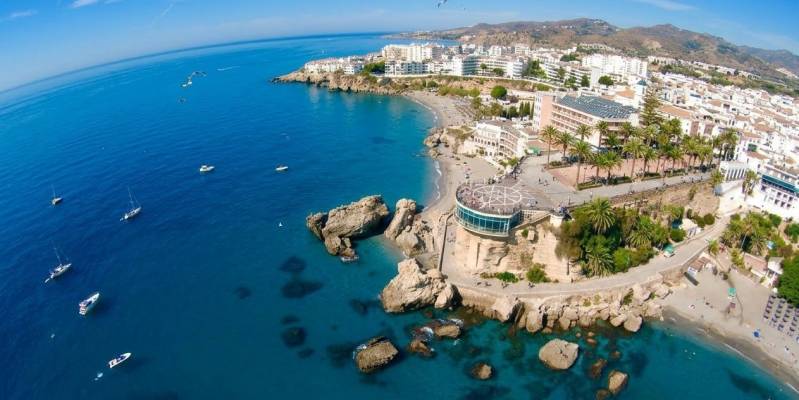
News website Andalucía Información calculated that over the past year, 75 municipalities grew while 27 lost residents; only Parauta remained completely unchanged. Surprisingly, the largest drop in absolute numbers occurred on the coast: Nerja lost 361 residents and now has 21,701. Monda, Cortes de la Frontera, and Cuevas del Becerro also saw declines.
Looking back five years, the deepest demographic pain is concentrated in the mountainous Serranía de Ronda region:
Opsommingsteken Júzcar, world-famous as the blue "Smurf village," dropped from 240 to 202 inhabitants, losing nearly a sixth of its population.
Opsommingsteken Atajate, the smallest municipality in the province, is down to just 167 residents.
Opsommingsteken Alpandeire, Serrato, Pujerra, and Cartajima are also seeing their populations dwindle.
These figures fit into a broader, troubling picture: depopulation now threatens six out of ten villages in Málaga province.
What is Spain doing to combat rural depopulation?
To turn the tide, the central government in Madrid and Spain’s regional authorities distributed €23 million last summer for rural development, aimed at boosting employment and public services in the most vulnerable villages. Meanwhile, municipalities in Málaga are taking matters into their own hands: as many as 35 villages are trying to attract newcomers with affordable rentals, cheap homes, and high-speed fiber-optic internet. However, the latest census shows these efforts have not yet reversed the trend.
How many foreigners live in Málaga?
According to figures from the Andalusian Institute of Statistics and Cartography (Instituto de Estadística y Cartografía de Andalucía), more than 341,000 foreigners lived in the province in 2025—accounting for nearly one in five residents. In Málaga city alone, the foreign population totals almost 70,000. Notably, while the capital is breaking records, it is growing proportionally slower than the rest of the province and is now home to exactly one-third of all Malagueños.
If you live on the Costa del Sol, you are sharing the roads, healthcare centers, and housing market with over 23,000 new neighbors every year. If you are looking for peace, space, and lower property prices instead, the doors in the Serranía de Ronda are wide open.
Share